Critical Design · 2022
Emotion Space Self-Construction
Building room for emotions that have nowhere to go.
A game, performance, and spatial theory responding to the lack of private emotional space in dense institutional environments.
Overview
"My university is similar to other Chinese colleges, which lack enough facilities to provide private spaces for their students. When you feel depressed, sad, or breakdown, there is no separate room for you to deal with your negative emotions. You can hear others crying and shouting from the corridors, which makes everyone feel embarrassed. This situation can also happen to people living in large cities today. Life is fast-paced, and pressure exists everywhere. However, these people don't have time or space to mitigate, and the negative emotions constantly aggregate."
This is a freelance activity. This project is about emotion and based on my observation towards things happened around me as well as my own experiences. This project includes two types of presentation, one is a unity game called Contend For Room, another is a performance Emotional “Monster”.
Background
Nowadays, we spend most of our time in public spaces, such as offices, schools, subway stations, and even the places many people live in are shared apartments.
The long exposure time in public places, makes us feel squeezed as we don’t have a private space to deal with our emotions, especially negative emotions. Therefore, suppression becomes the main method for emotion regulation. However, according to the research, suppression can lead to some bad consequences, such as a decrease in memory ability, an increase in blood pressure, and worse mood repair.
If suppression is not a good idea to deal with our negative emotions, what could be? We can see that one of the prominent problems is the lack of private space. So in this project, I propose a theory to construct an emotional space, which can” extend our private space, so that we will not feel squeezed and help us to deal with our emotions.
Core Theory
Emotion Assemblage
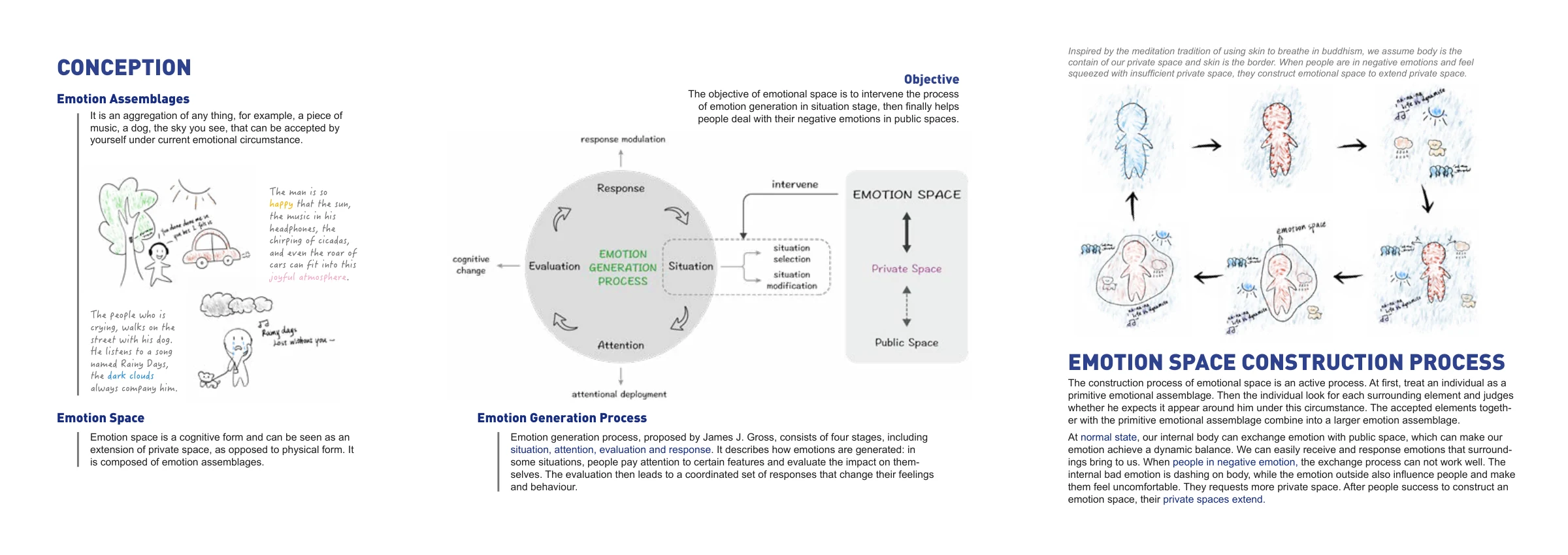
It is an aggregation of any thing, for example, a piece of music, a dog, the sky you see, that can be accepted by yourself under current emotional circumstances.
Emotion Space
Emotion space is a cognitive form and can be seen as an extension of private space, as opposed to physical form. It is composed of emotion assemblages.
Emotion Space Construction
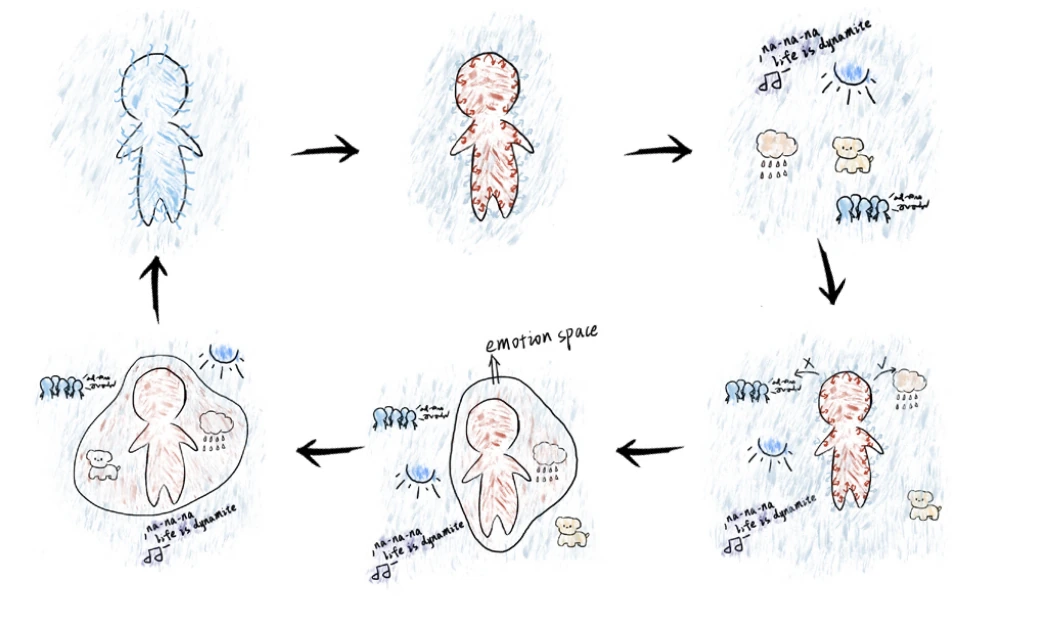
The construction process of emotional space is an active process. At first, treat an individual as a primitive emotional assemblage. Then the individual looks for each surrounding element and judg- es whether he expects it to appear around him under this circumstance. The accepted elements together with the primitive emotional assemblage combine into a larger emotional assemblage.
At normal state, our internal body can exchange emotion with public space, which can make our emotion achieve a dynamic balance. We can easily receive and respond to emotions that surroundings bring to us. When people in negative emotion, the exchange process can not work well. The internal bad emotion is dashing on body, while the emotions outside also influence people and make them feel uncomfortable. They requests more private space. After people succeed in constructing an emotion space, their private spaces extend.
Game Design
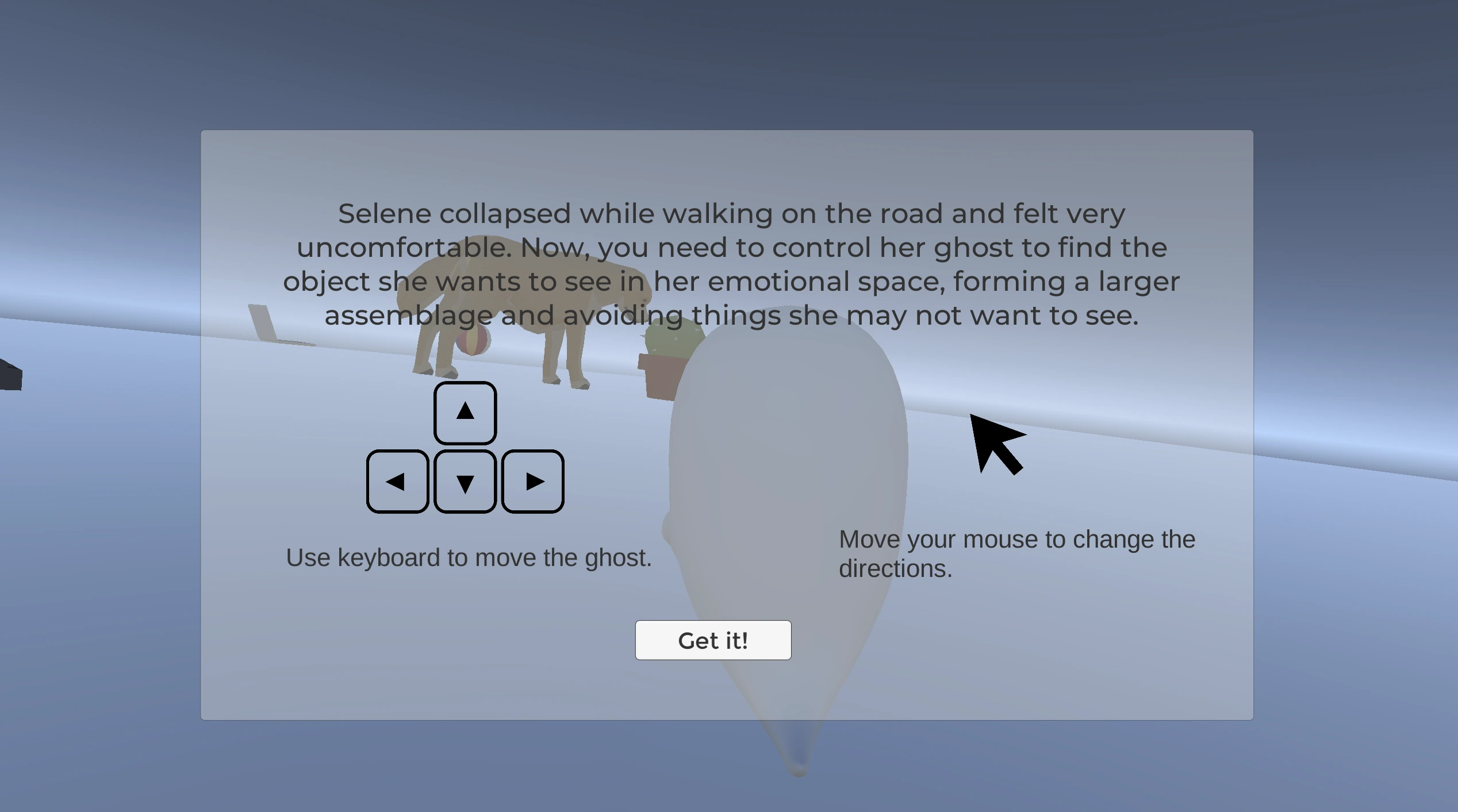
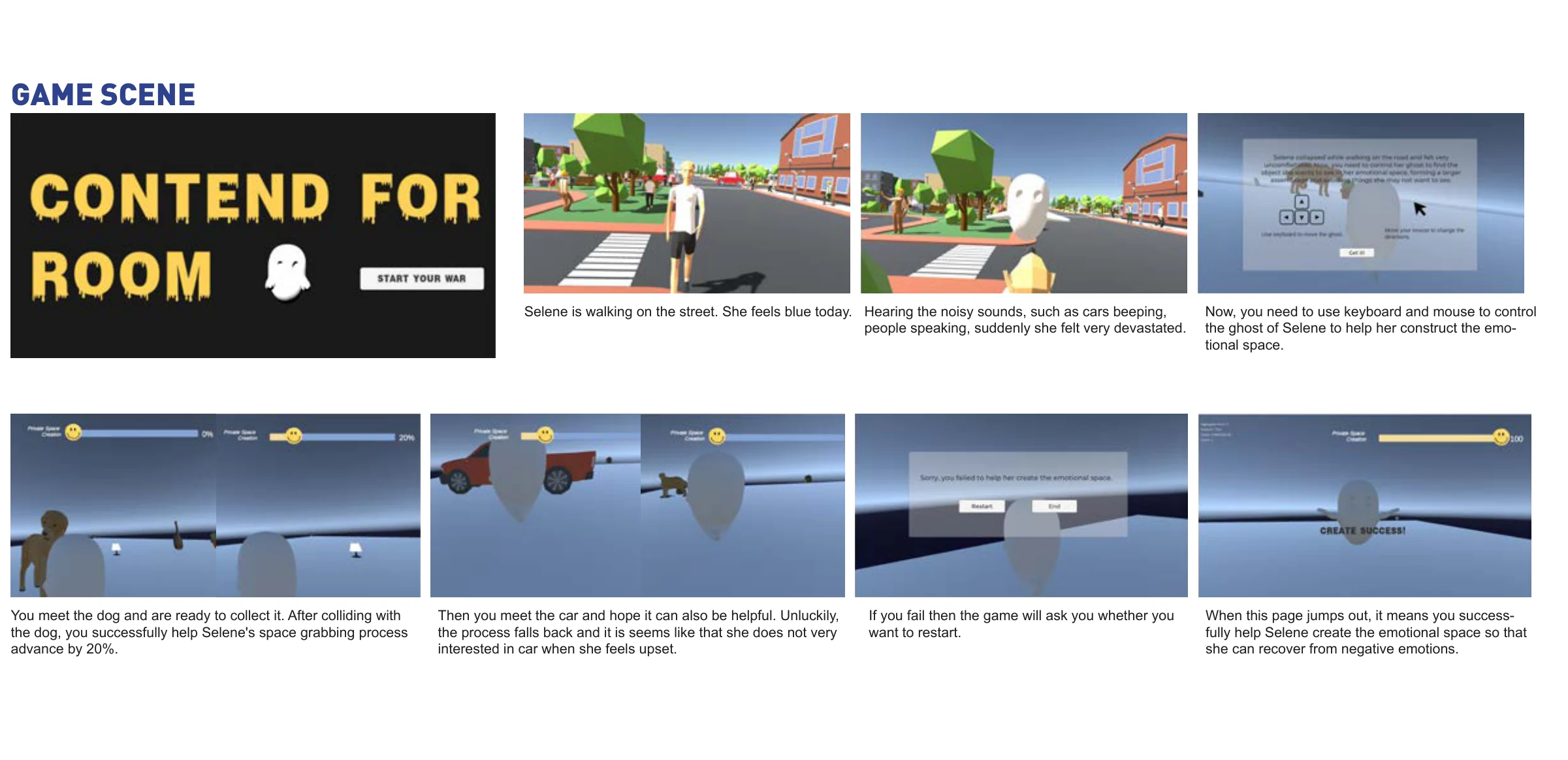
The game is developed on Unity and illustrates a scene to show when people need and how to create an emotion space.
The more information about this project can be found on github.
The game can be played on website.

Performance
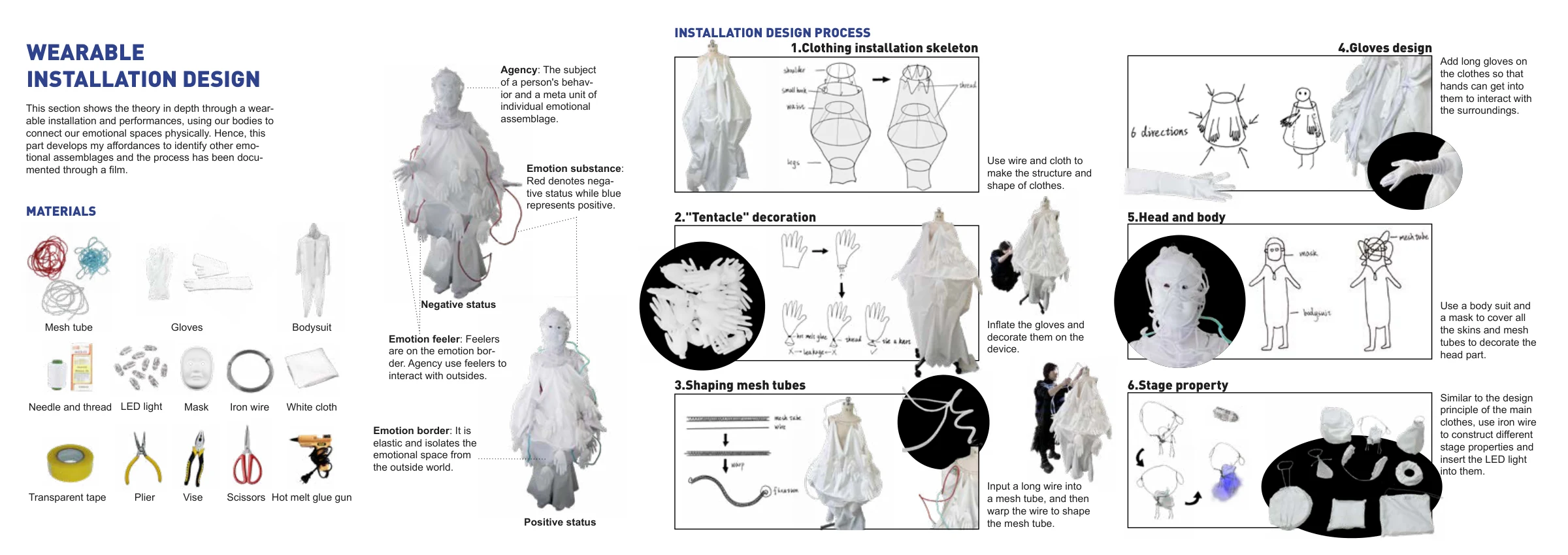
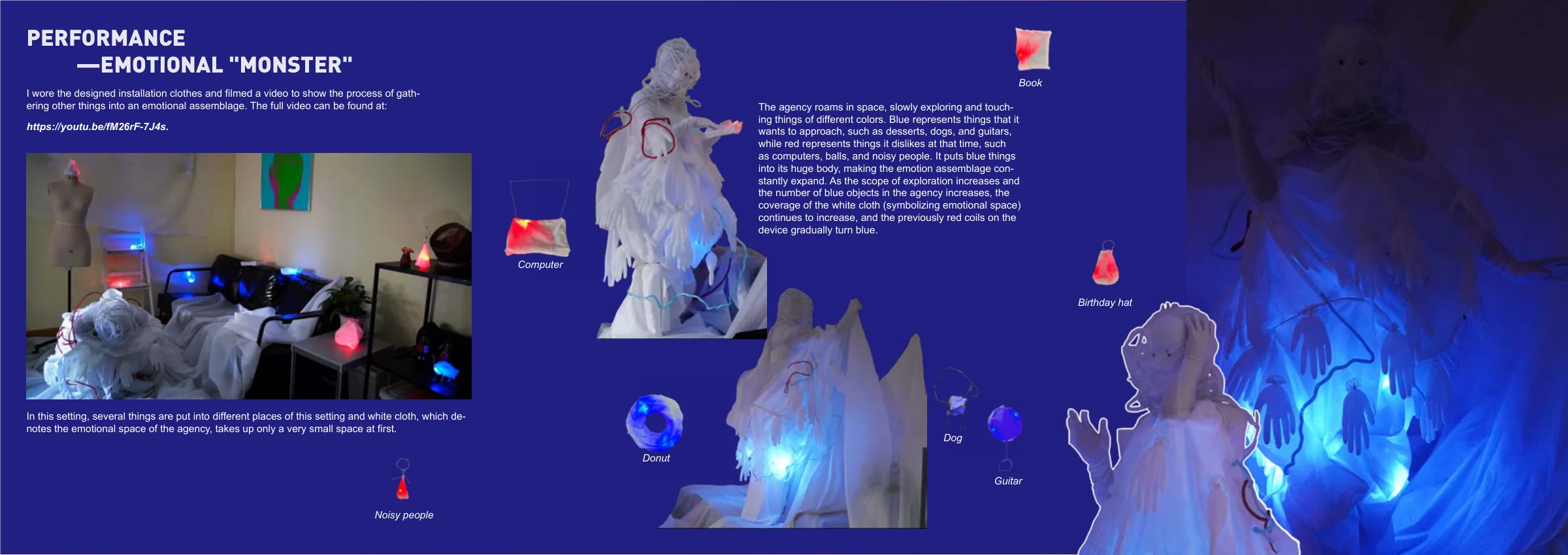
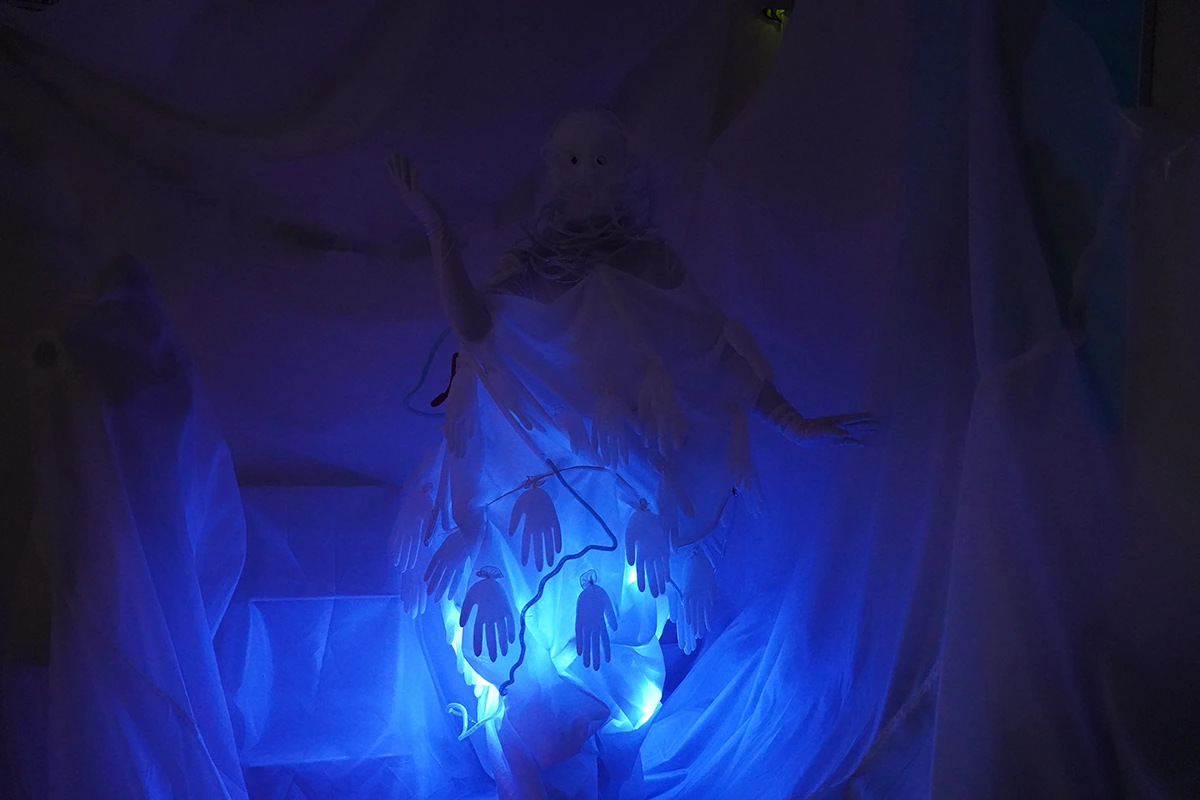
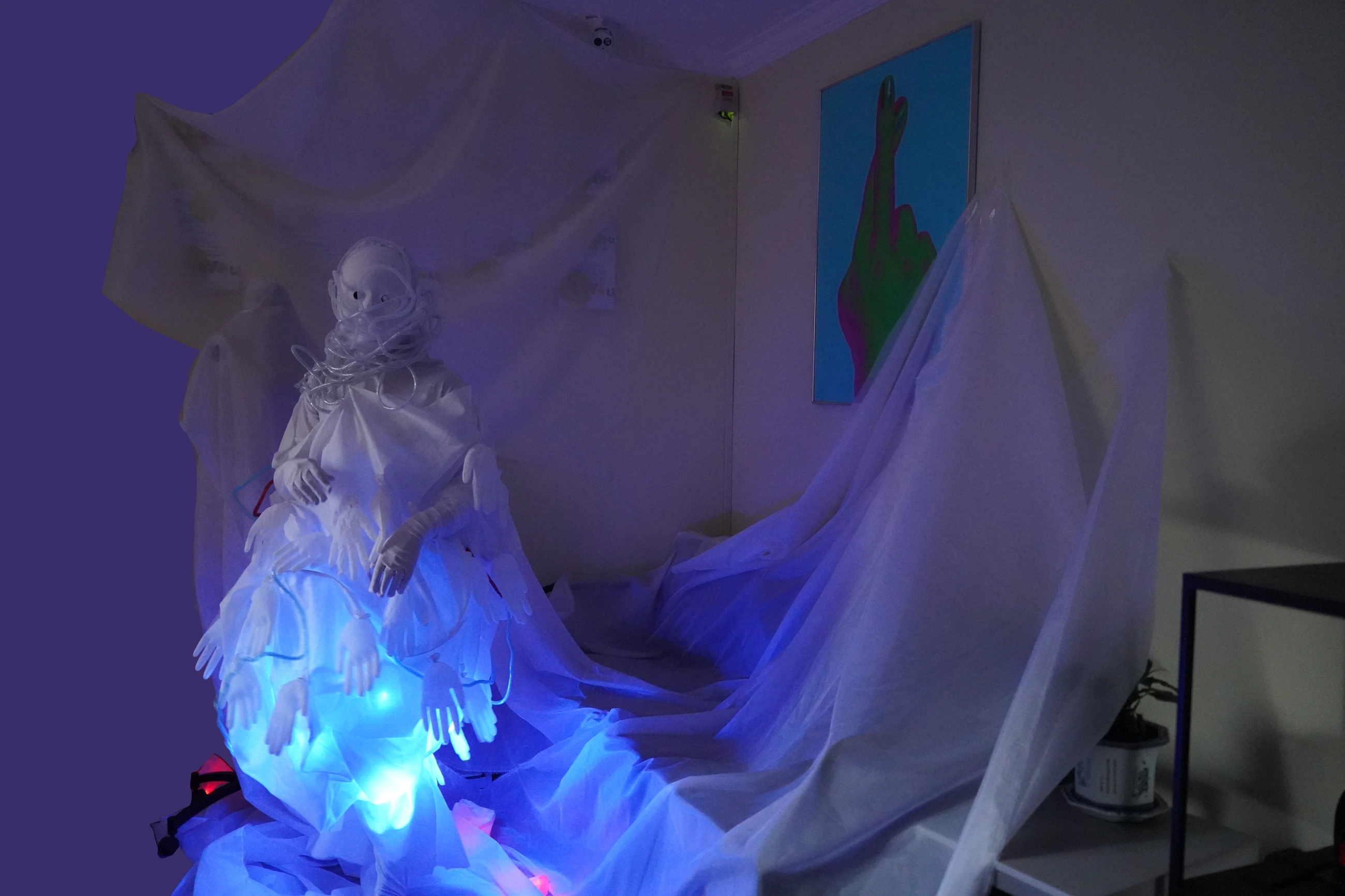
This section shows the theory in depth through a wearable installation and performances, using our bodies to connect our emotional spaces physically. Hence, this part develops my affordances to identify other emotional assemblages and the process has been documented through a film.
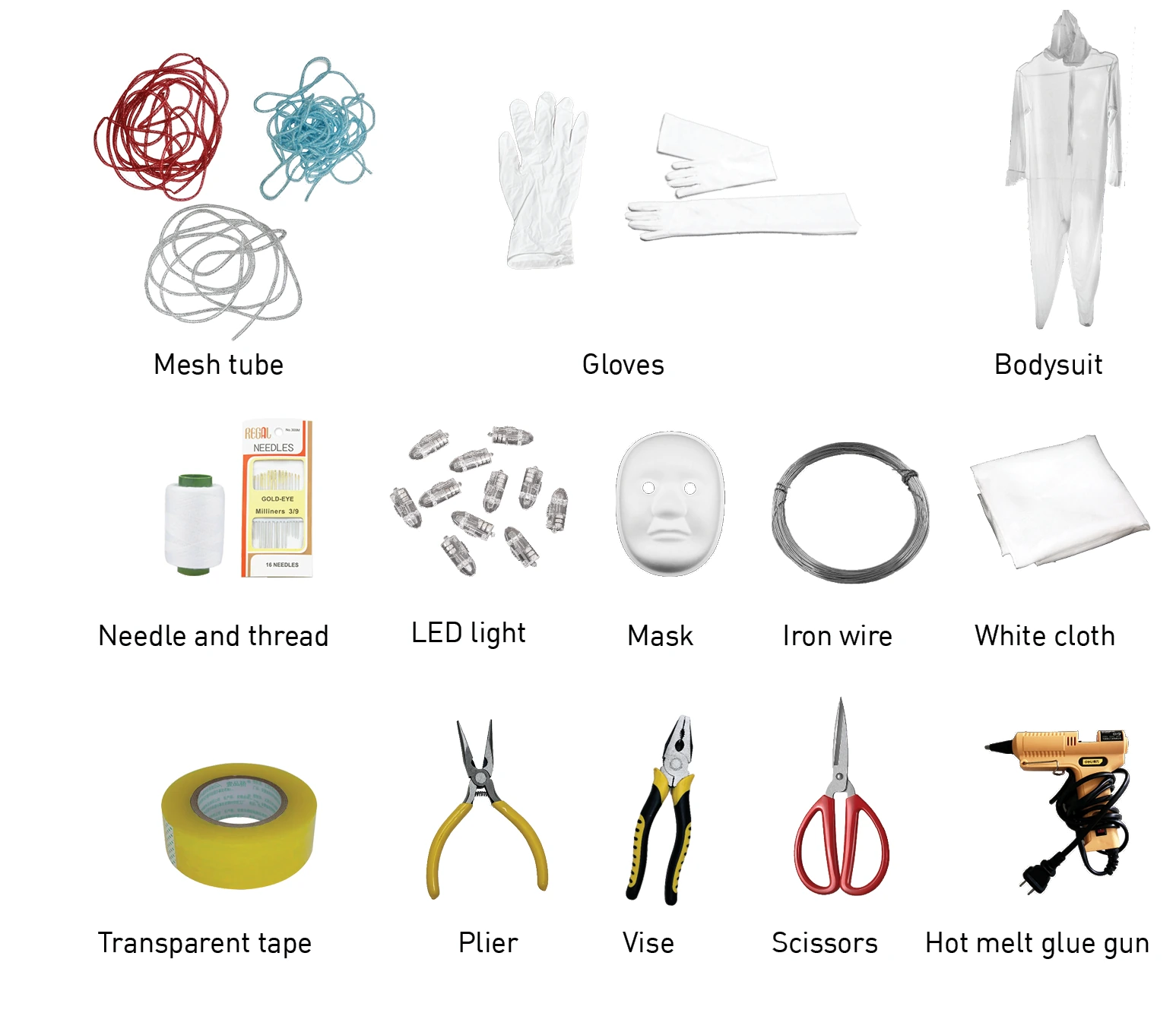
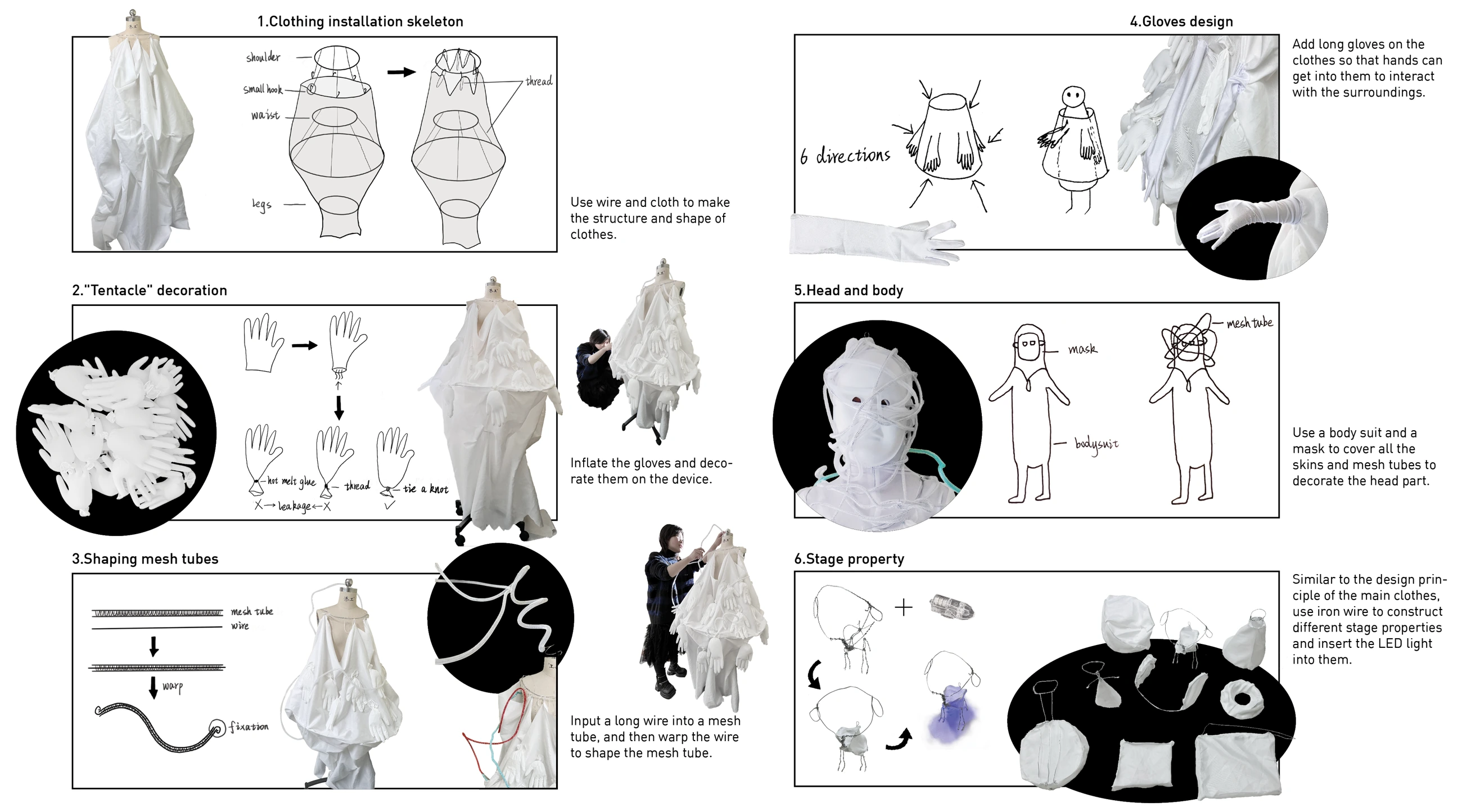
Materials and Design Process
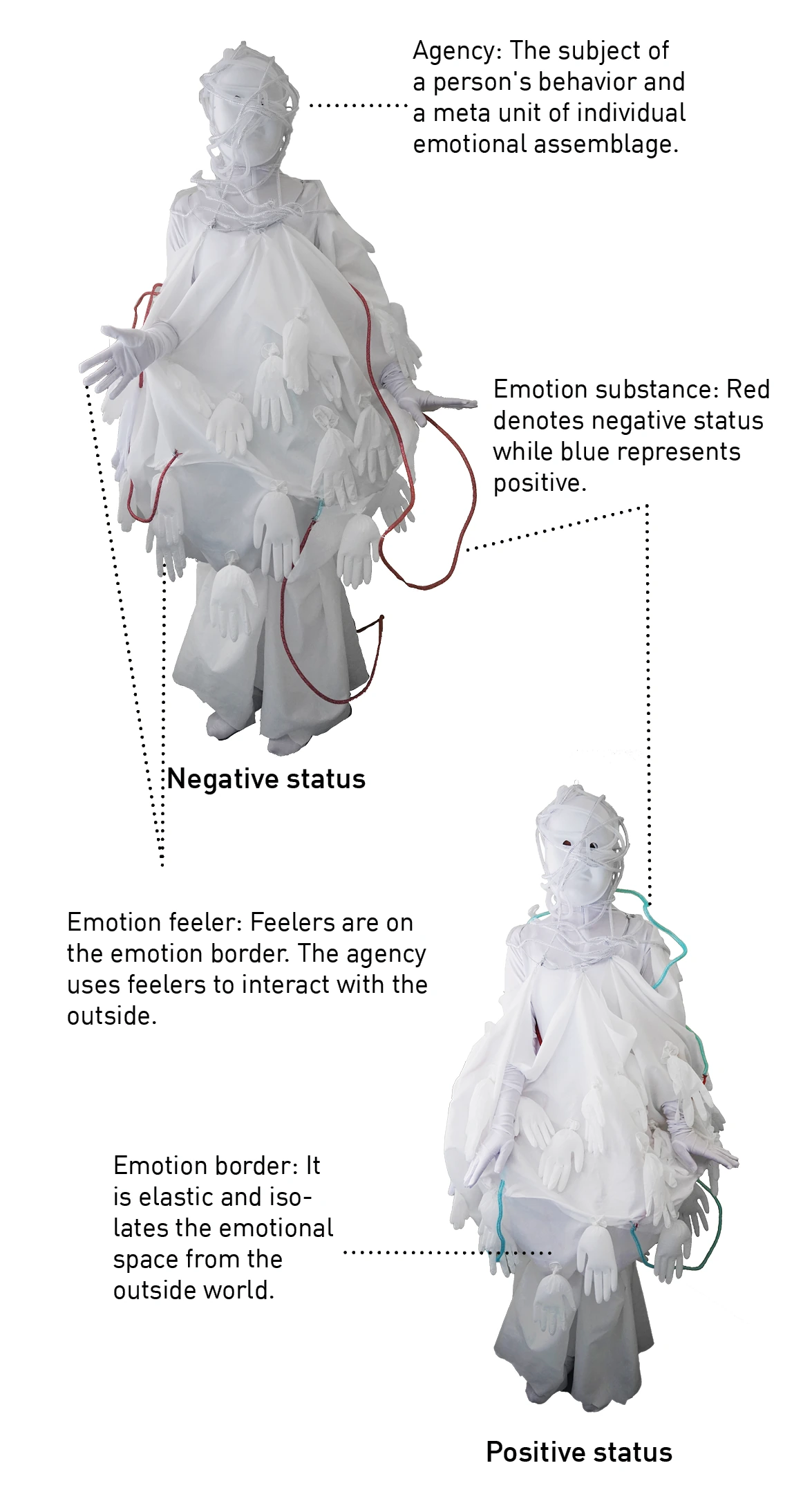
Design Status
Negative and positive states are indicated by the color of the tube material wrapped around the clothing.
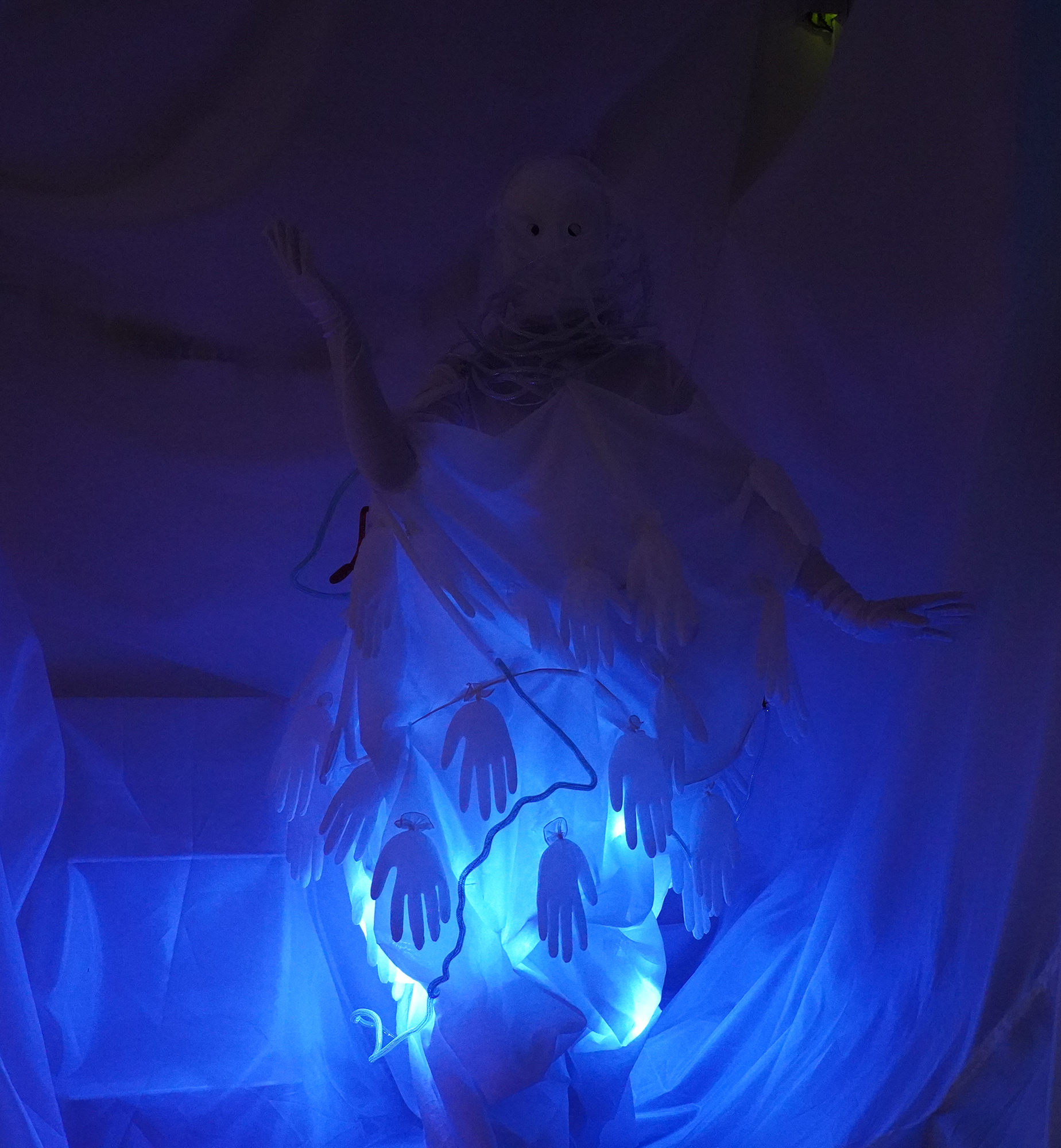
Wearable Installation Photos
Design notes
Privacy is also an emotional resource
In many university environments, students have few places to be alone. Negative emotions are pushed inward because there is no physical or social room in which to process them.
This project proposes emotional space as something that can be actively constructed—an extension of private space rather than a fixed room.
One idea, two embodied experiences
The Unity game Contend For Room turns the search for private space into an interactive struggle. The performance Emotional “Monster” makes suppressed feeling visible through the body.
Together, the works test how play, performance, and spatial metaphor can help people encounter emotions without reducing them to a diagnosis.
Constructing an emotional space
The research uses a sequence of situation, attention, evaluation, and response to examine how emotions develop. Meditation and the idea of emotional assemblages inform an alternative: space can be built through attention, bodily action, and relationships with nearby objects, rather than only through walls.
Contend For Room
The Unity game follows Selene through a noisy street and a reconstructed emotional environment. A ghost becomes a guide for turning a difficult encounter into a space that the player can act within. Scenes and environmental changes translate an abstract emotional process into a navigable experience.
Play the game · View the source
Making the emotional monster
The wearable installation extends the same question into physical performance. Wire and cloth establish a body-sized structure, while mesh-tube tentacles, gloves, a suit, and a mask alter its silhouette. The construction makes emotion appear as something that can expand beyond the individual body.
The performance uses red and blue objects to distinguish negative and positive emotional associations. Approaching, avoiding, and accumulating these objects becomes a way to construct a changing personal boundary.