Critical Design · 2024
Don’t Touch
An architecture that questions institutional authority.
A museum extension proposal that challenges the distance between public knowledge, cultural authority, and the people museums claim to serve.
Overview
In modern society, museums often take on a role of public education that appears open but is, in reality, restricted. Through their structure and methods of display, museums reinforce barriers to knowledge, embedding an intangible sense of authority that is untouchable, which reflects the power relations of Foucault’s “disciplinary society”. By limiting viewer interaction with exhibits, traditional museums establish a mechanism of control, making art inaccessible.
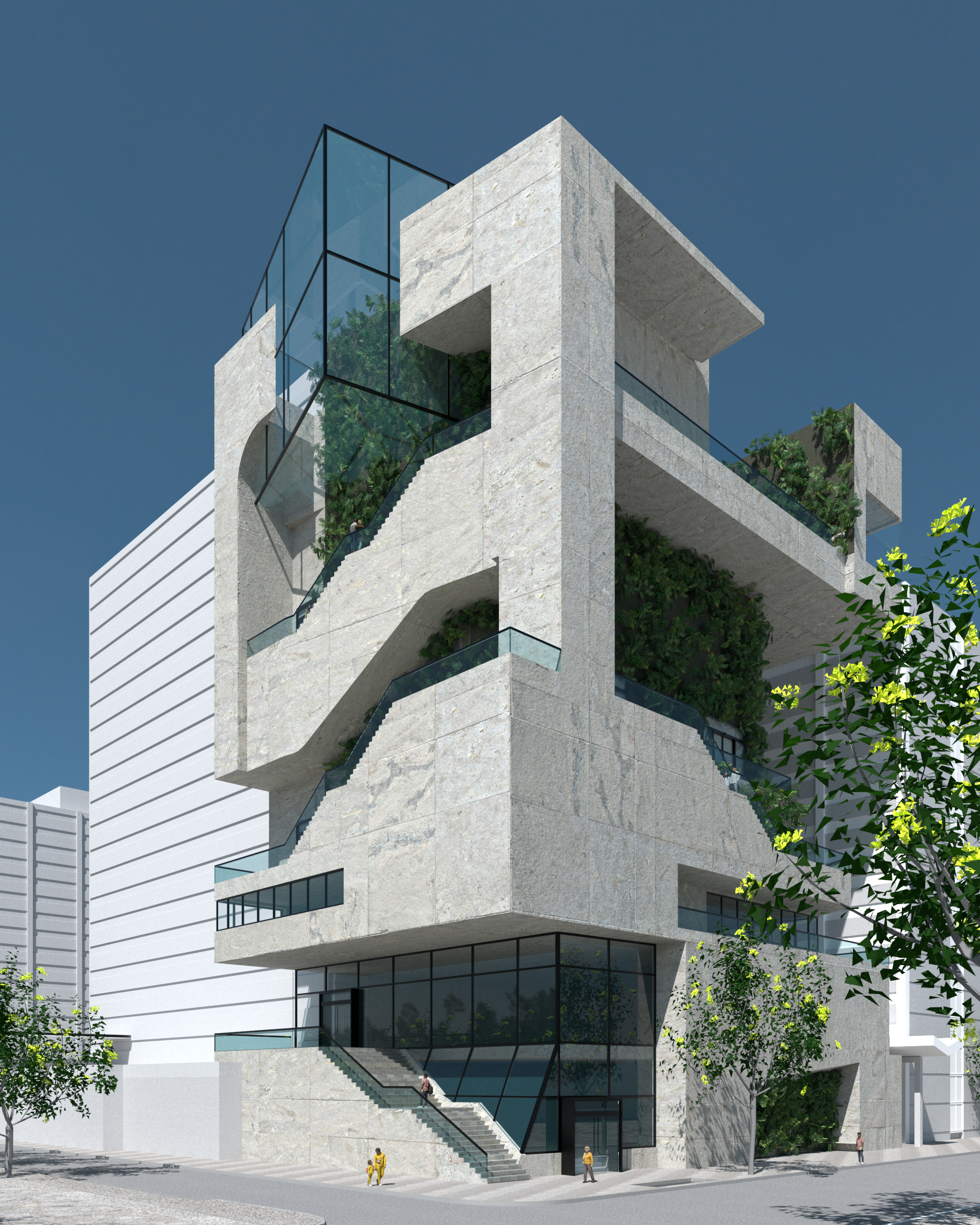
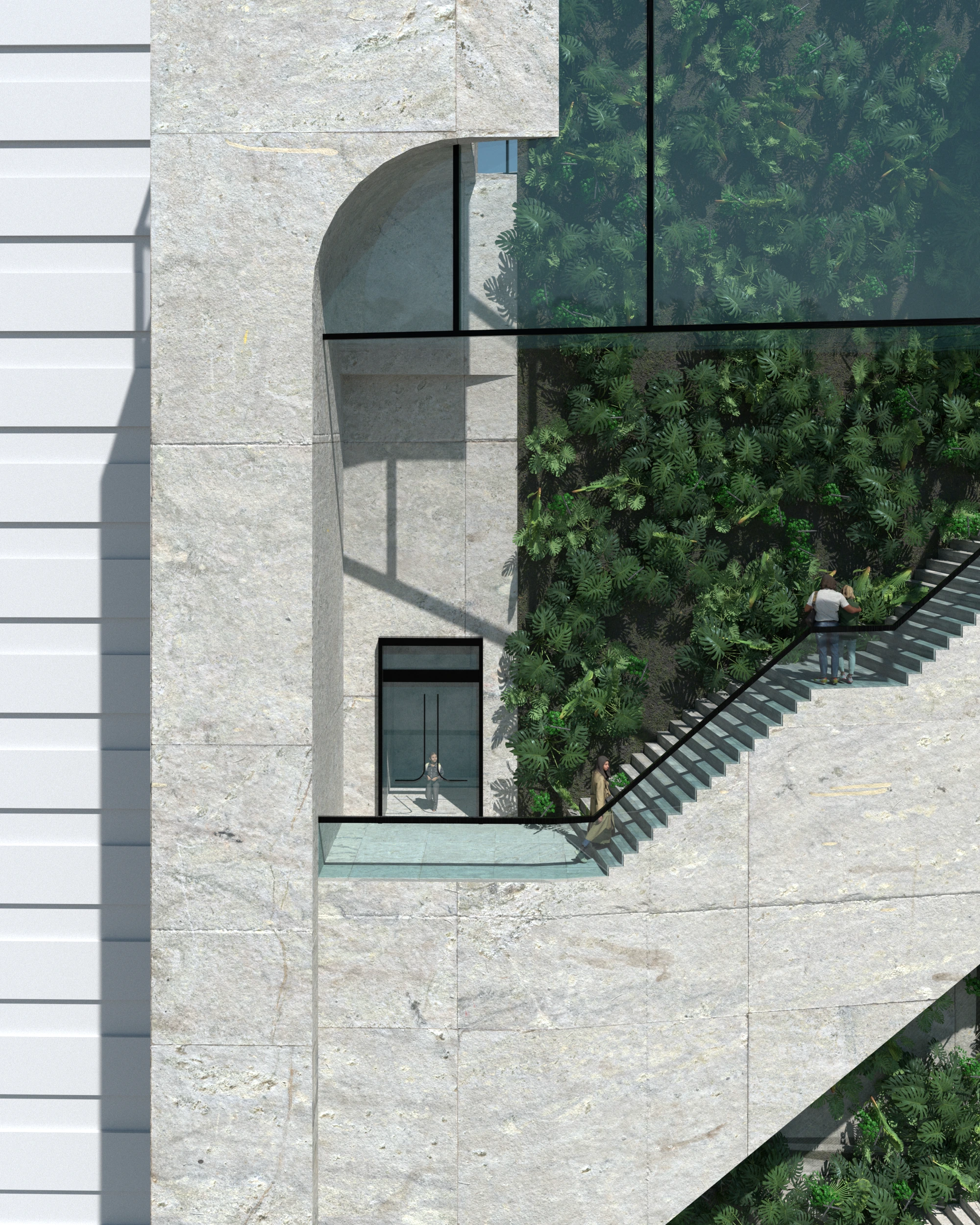
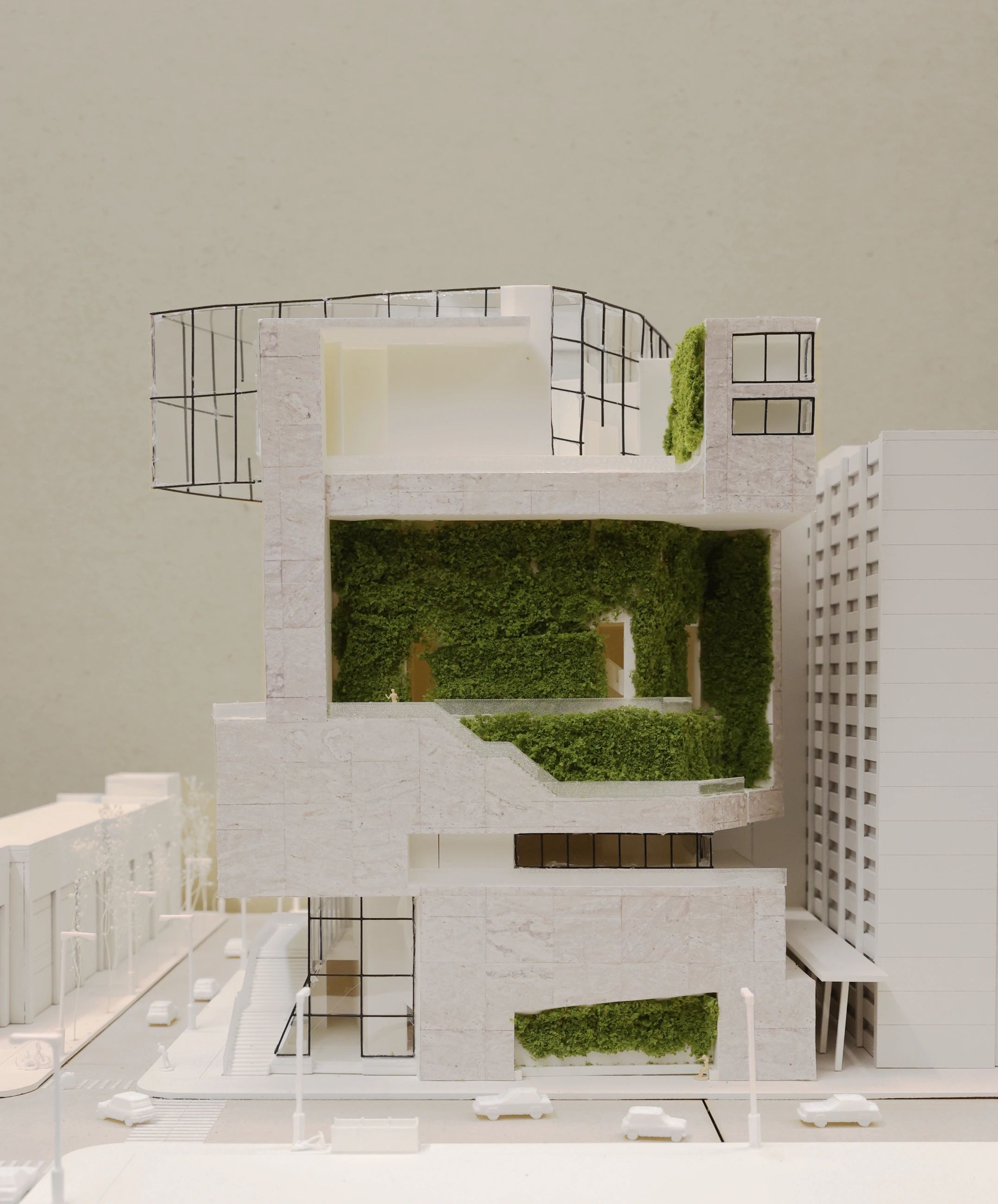
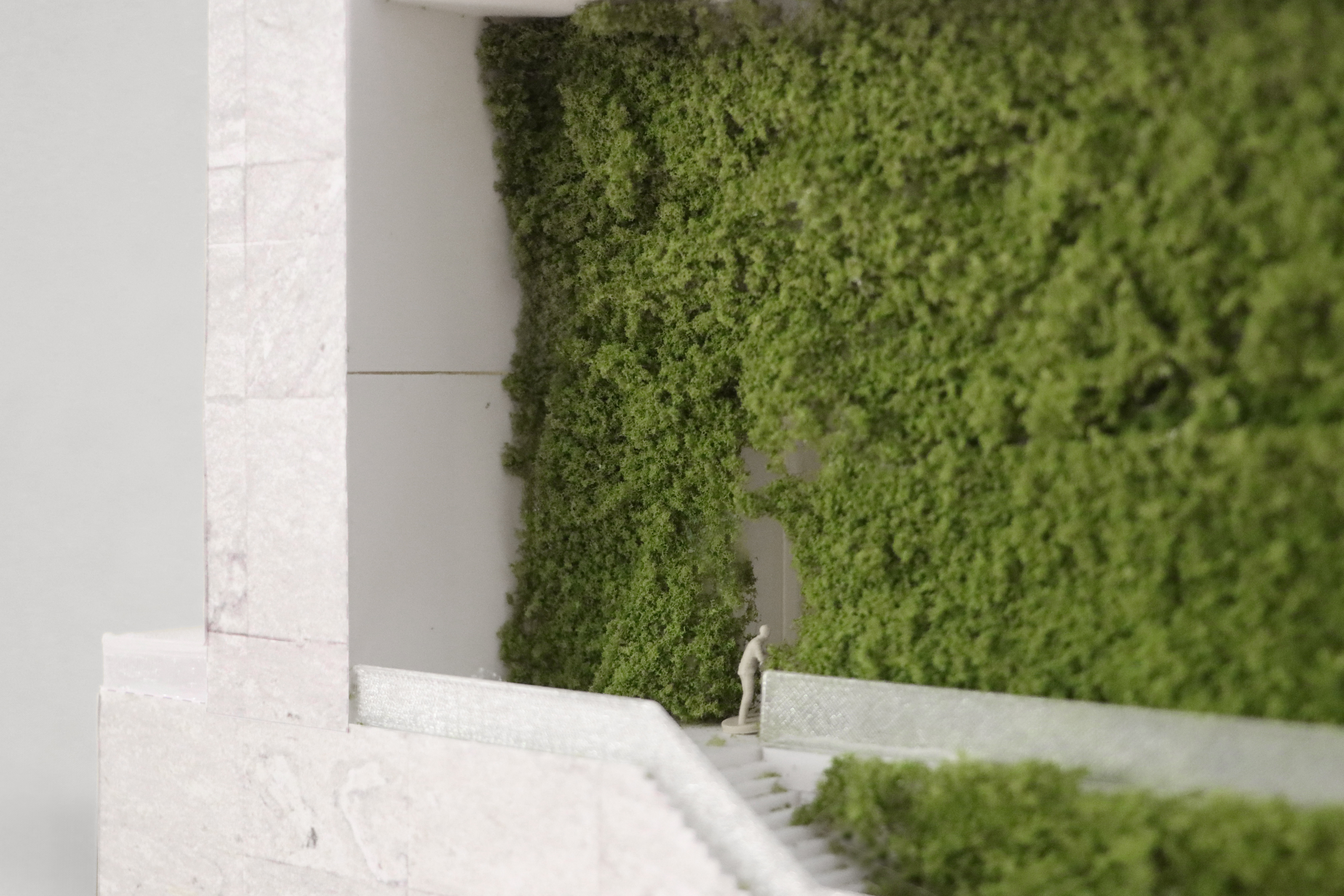
This project questions the “untouchable” nature of traditional museums by constructing walking stairs with green walls wrapping on exteriors, where viewers can engage actively. It explors how art can establish a direct dialogue with audiences instead of only authoritative interpretation.
As an open, free art space, the ICA presents possibilities of domestic, open art for public. Through a reconfiguration of museum space, the viewer is no longer a passive observer but becomes an active perceiver. This approach is not only a critique of museum institutions but also an exploration of a more equitable, interactive relationship between art and the public.
Line Drawings
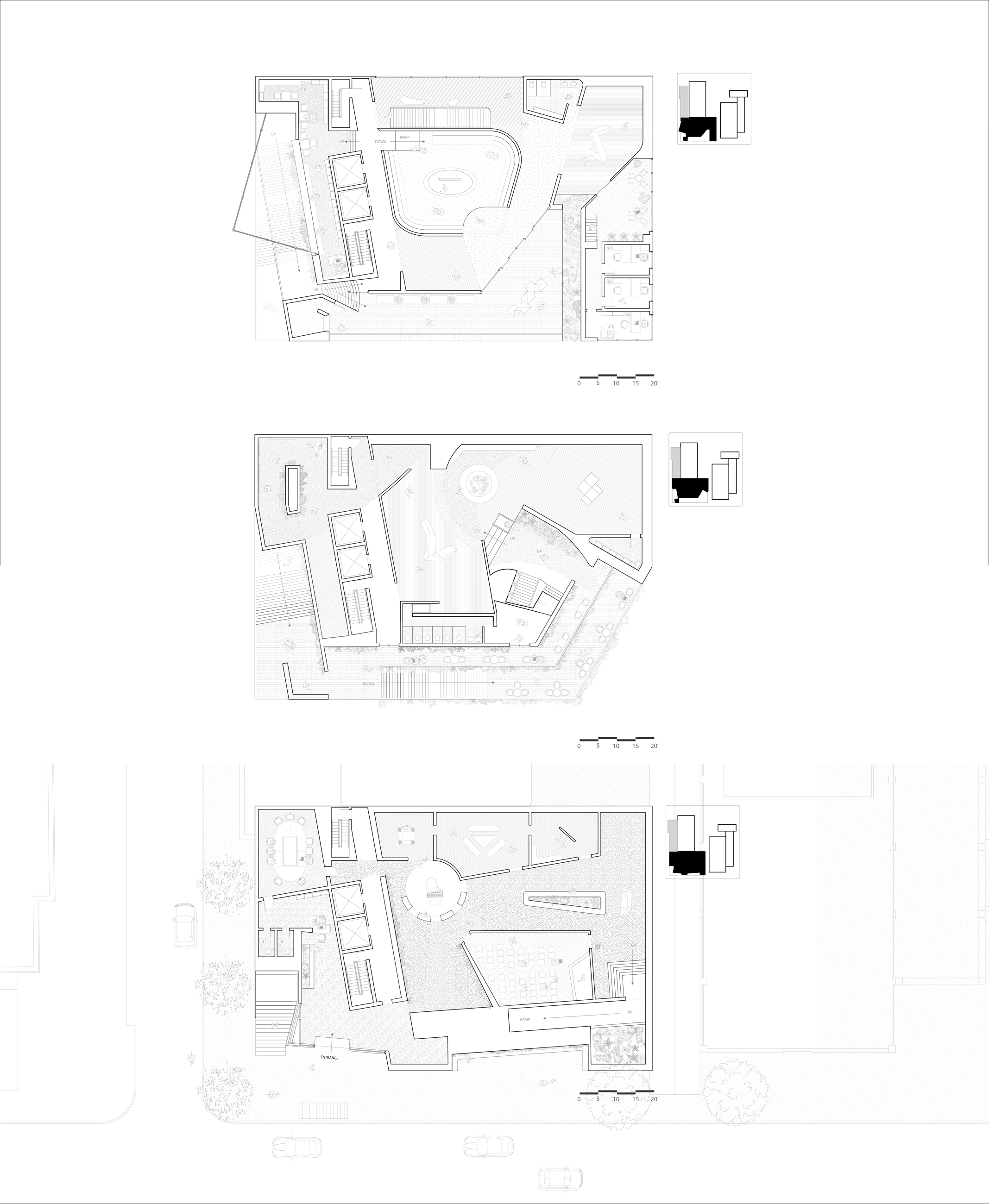
Floor Plan
Section
Rendering Pictures
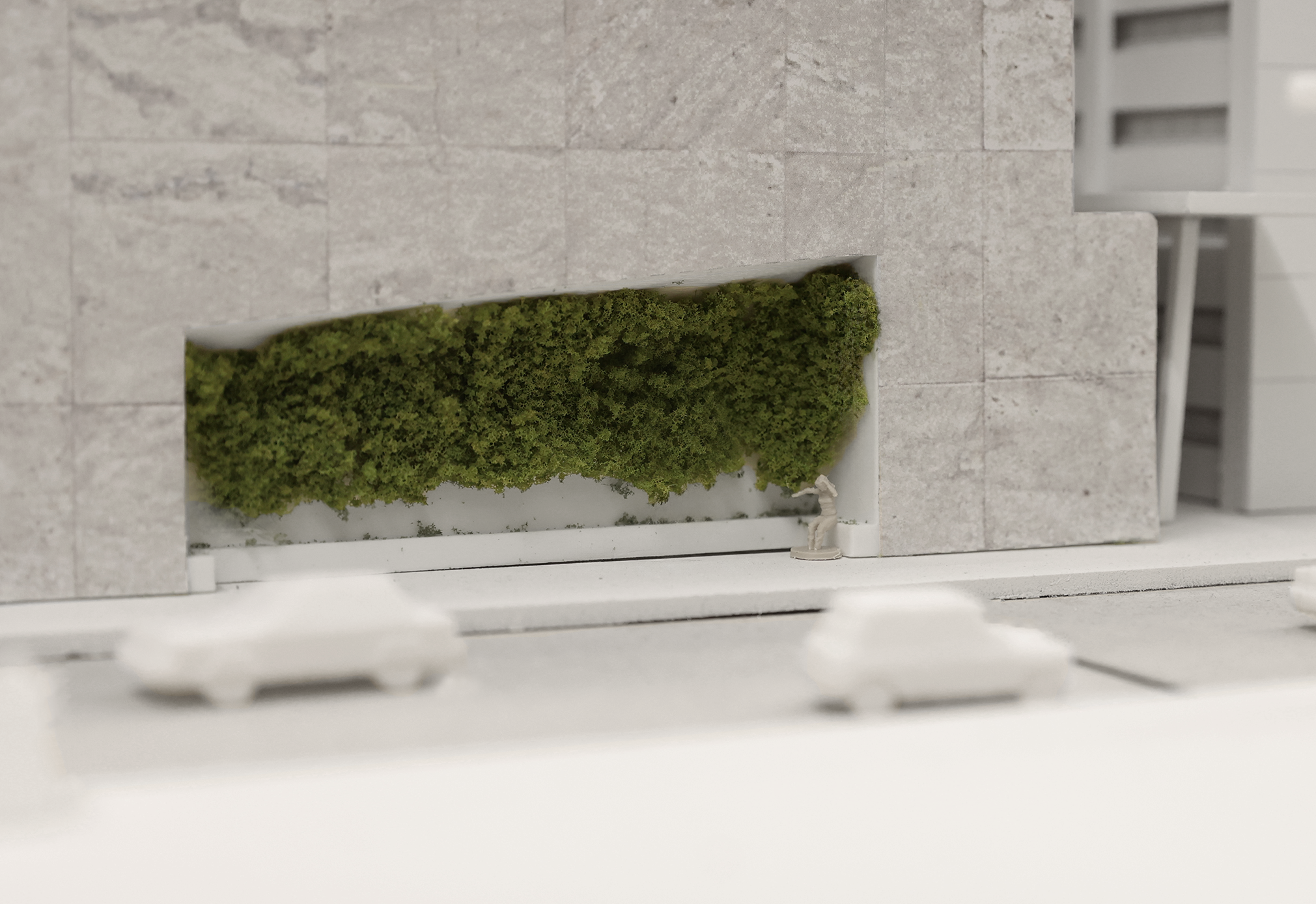
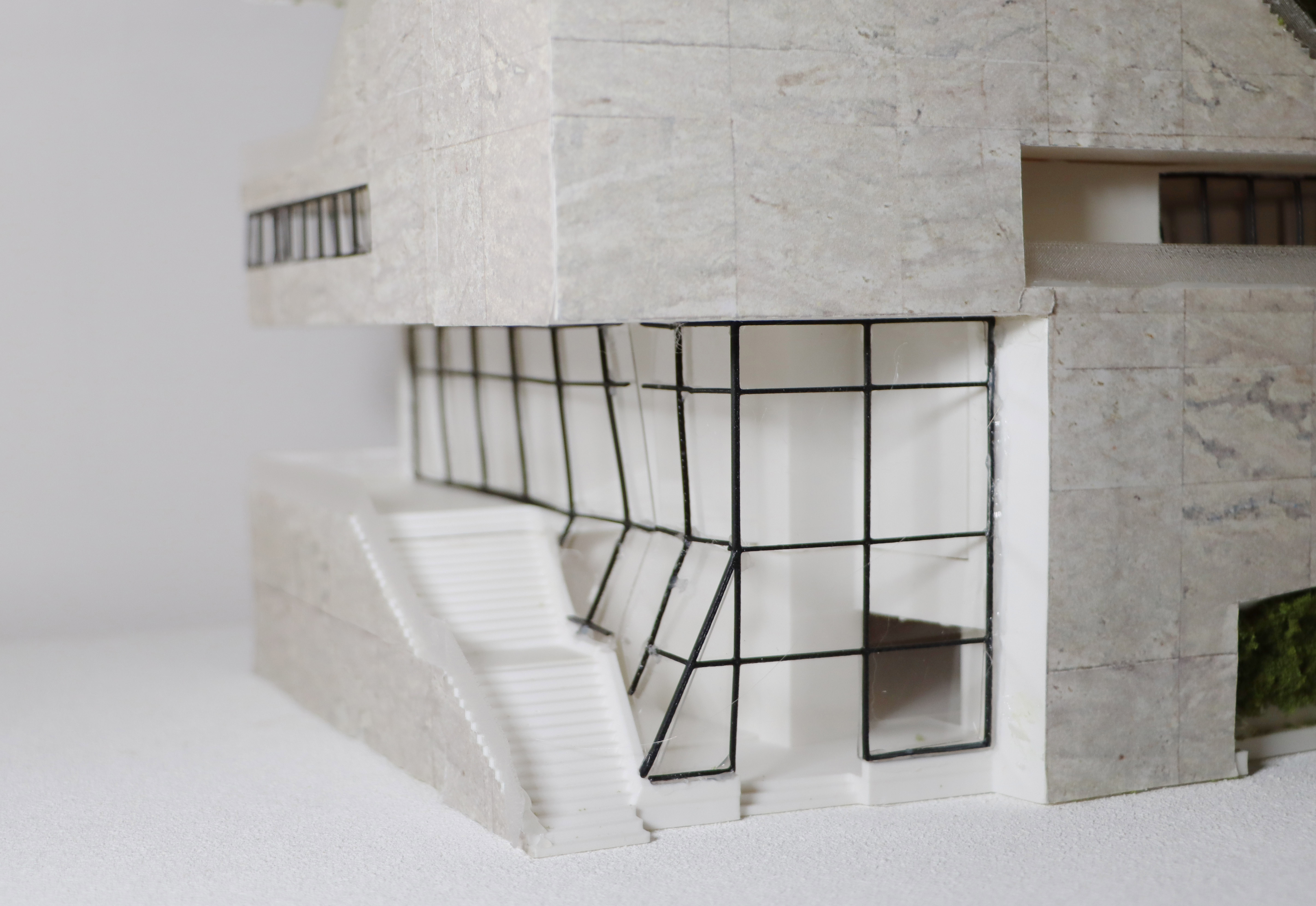
Model Pictures
Design notes
The invisible barrier around knowledge
Museums present themselves as open institutions, yet their spatial structure and display logic often reinforce authority. Objects are visible but untouchable; knowledge is public but tightly mediated.
Don’t Touch begins with this contradiction and asks how an extension could make the institution’s boundaries legible rather than natural or inevitable.
Transparency as spatial argument
The design exposes circulation, storage, production, and viewing as overlapping systems. Transparency is used not as a visual style, but as a way to reveal who can access what—and under which conditions.
The project turns architecture into a public question about ownership, participation, and the social role of the museum.