Critical Design · 2023
Disclosure
Making the unequal exchange of privacy tangible.
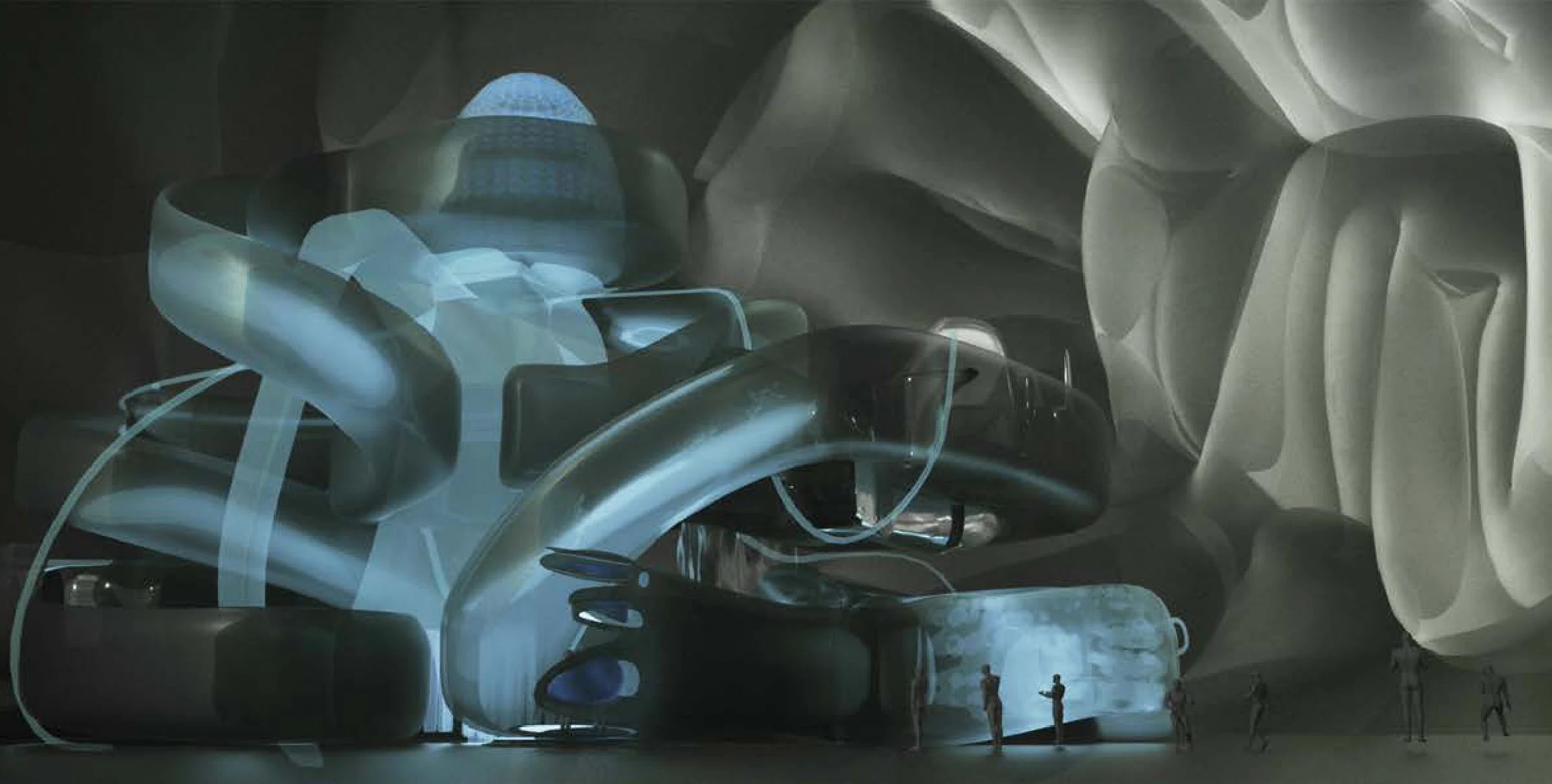
An interactive architectural proposal that turns data collection, identity exchange, and surveillance into a bodily journey.
Archived in the 2023 portfolio. The year shown is the archive year; the project completion date is to be confirmed.
Privacy as an unequal exchange
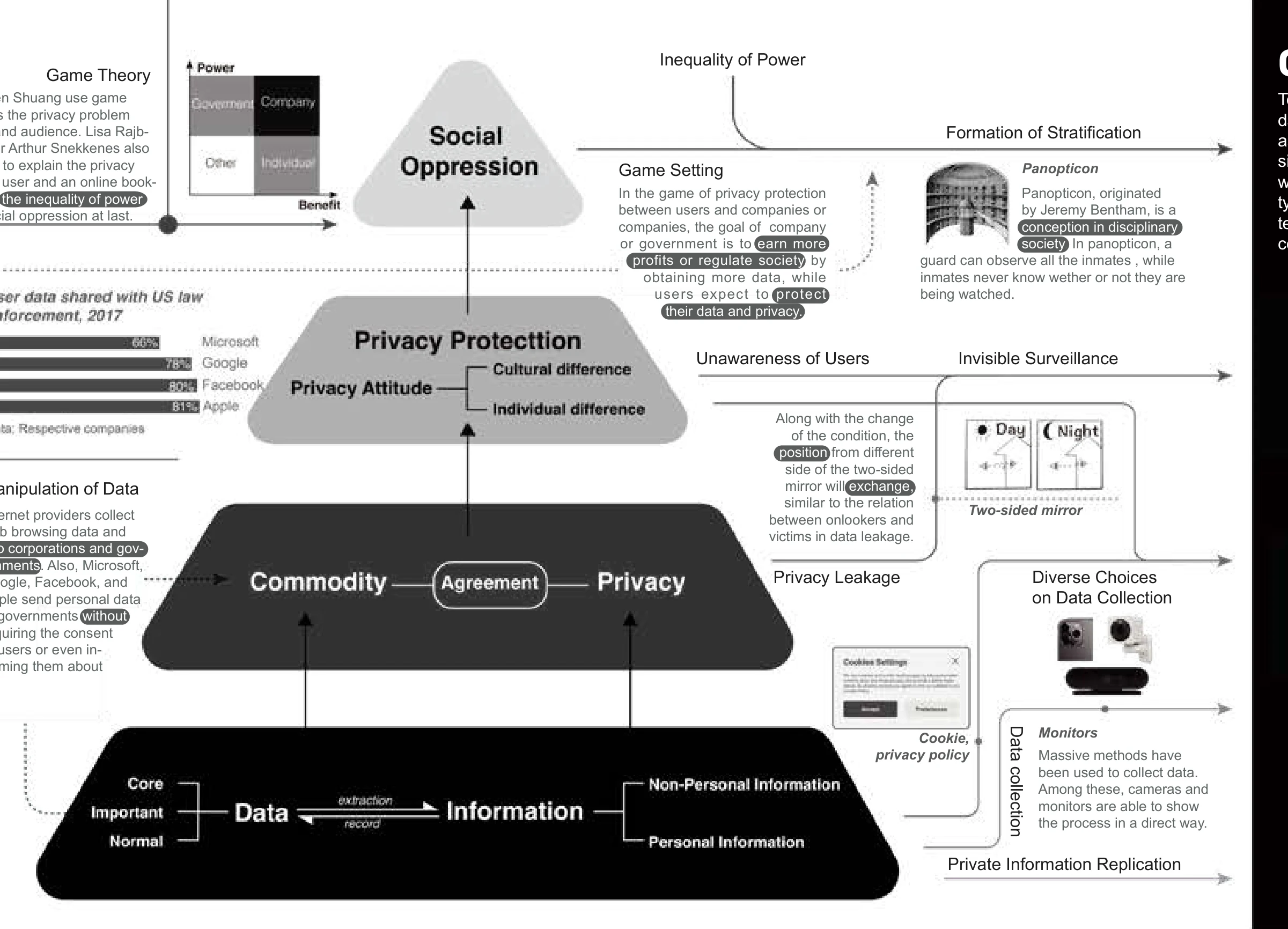
Disclosure examines the relationship between individuals and organizations in an information-driven society. Giving up personal information can appear voluntary, yet the terms of that exchange are rarely equal. The project translates this imbalance into an environment that visitors encounter through movement, contact, and observation.
The research traces a shift from direct physical discipline toward distributed information control. Game-theoretic diagrams frame privacy as a negotiation in which participants have different resources and different abilities to see what is happening.
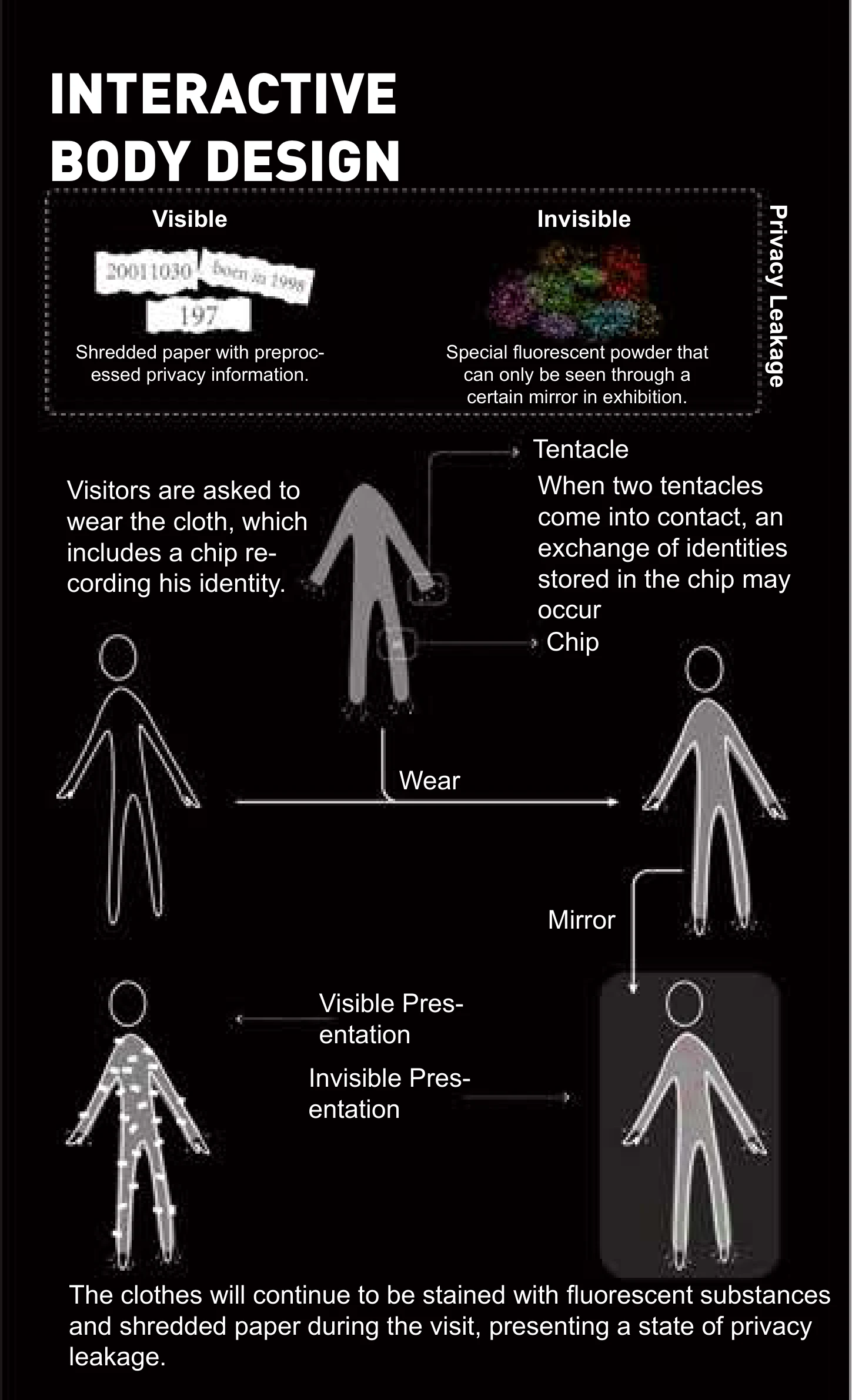
A body that carries its traces
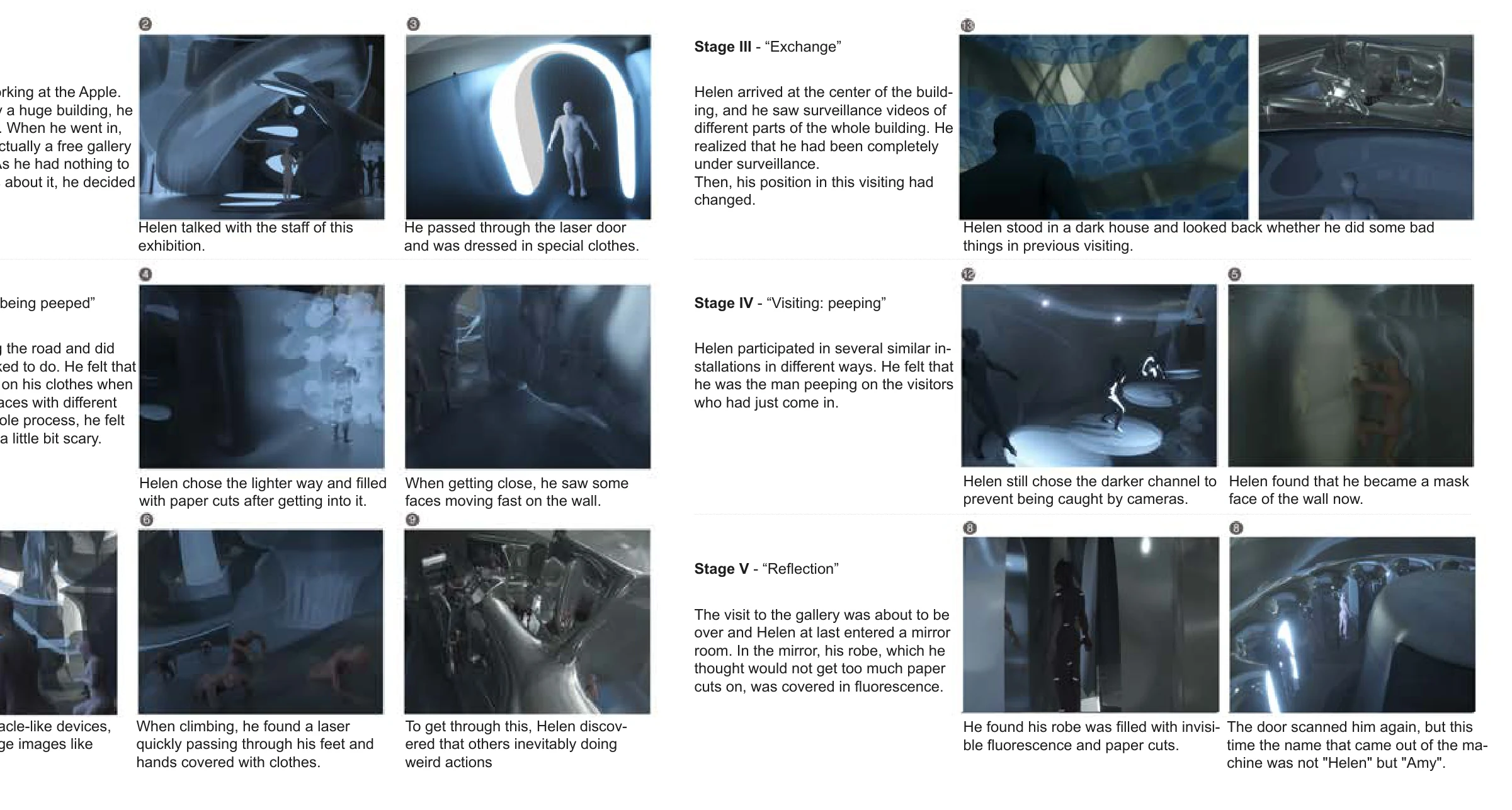
Visitors are imagined wearing a garment with a chip that records an identity. Contact between extended tentacles can exchange the identities stored on the chips. Paper fragments carrying processed private information and fluorescent powder accumulate on the garment as people move through the installation.
Some traces are immediately visible; others only appear through particular mirrors. The body becomes an interface for understanding information leakage: a visitor can leave evidence without noticing it, then discover that evidence later.
Moving between watching and being watched
A three-floor architectural sequence moves through entry, exposure, exchange, observation, and reflection. Narrow passages and openings allow visitors to glimpse one another. A mask wall separates those who climb or move behind it from those who can see faces through its openings.
Mirror rooms reveal the accumulated traces. Staircases and contact surfaces create further exchanges, while an elevated viewing position lets visitors look back over a route they previously experienced from within.
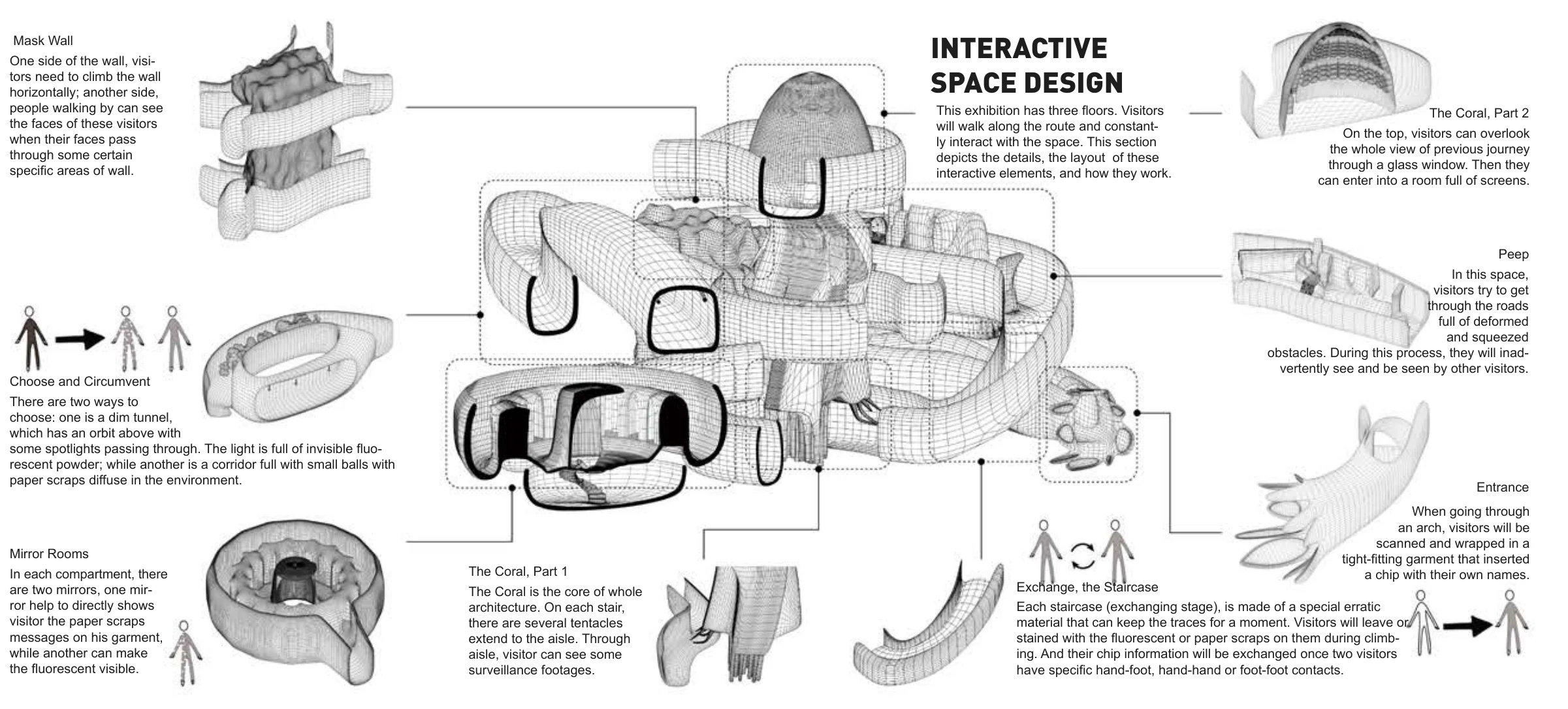
The experience changes the visitor’s position from being observed to observing others. This reversal makes privacy a relationship between people and systems, rather than a simple choice to hide or disclose.
What the proposal makes visible
Disclosure is documented as an architectural and interaction proposal. Its drawings and staged scenarios explore how an abstract information relationship might become perceptible through space. The central question is how a person can recognize—and respond to—an exchange whose consequences are usually hidden.